

What is animal fantasy?
Definition, history and what makes this series different
In a world where elves, dwarves and humans dominate the stages of fantasy, there is a subgenre that deliberately takes a different path: animal fantasy – also known in English as Animal Fantasy. Here, humans are not the heroes. Here, bears, griffins, weasels, cats and mice carry the story. They think, feel, argue, love and fight – and yet they remain animals.
“Legends from Before Time” is one of the few works to pursue this genre consistently and without compromise: an epic world with neither humans nor classic fantasy races. Only animals. And their tales.
Definition: What makes animal fantasy?
In animal fantasy, the central characters are animals. They possess intelligence, language, culture and complex societies. The range is broad:
Some stories portray animals as heavily anthropomorphized characters (they wear clothes, live in houses, and wage wars with swords).
Others stay close to the animal’s natural character while still telling a profound, often dark story from its perspective.
Both forms have one thing in common: the animals are at the centre. They are neither companions to human heroes nor mere symbols. They are the protagonists.
The Greenwood Encyclopedia of Science Fiction and Fantasy describes true animal fantasy as stories in which animals act in natural or semi-natural settings while displaying human emotions and making human-like decisions – without humans dominating the scene.
Animal fantasy is the modern, narratively sophisticated evolution of the fable: featuring individual characters, complex conflicts and a distinct, internally consistent world.
Two major strands of animal fantasy
1. Light anthropomorphism
The animals remain outwardly and instinctively close to their real-world species. They speak and think, but they do not wear armour or build castles in the human sense. The best-known example is Richard Adams’s Watership Down (1972). The rabbits behave like real rabbits – and that is precisely what makes their story so moving.
2. Strong anthropomorphism
Here, animals become fully fledged cultural beings. They have cities, kingdoms, religions, swords and intrigues. Classics of this approach include Brian Jacques’s Redwall series (mice, badgers and rats vying for control of a medieval abbey) and Erin Hunter’s Warrior Cats (cat clans with their own laws and feuds).
“Legends from Before Time” clearly falls into the second category.
A brief history of the genre
The roots of animal fantasy reach far back:
- Ancient fables and medieval animal epics (such as the “Roman de Renart”, c. 1170)
- Kenneth Grahame’s “The Wind in the Willows” (1908)
- Felix Salten’s “Bambi” (1923)
- Robert C. O’Brien’s “Mrs. Frisby and the Rats of NIMH” (1971)
- Richard Adams’s “Watership Down” (1972)
- Brian Jacques’s “Redwall” (since 1986)
- Erin Hunter’s “Warrior Cats” (since 2003)
- Paru Itagaki’s “Beastars” (since 2016)
Why animal fantasy is so fascinating
Animal fantasy allows human themes – power, loyalty, fear, love and betrayal – to be told from an unfamiliar perspective. Because the characters are animals, the story creates natural distance while also bringing an unexpected sense of intimacy. Readers recognise themselves in the bears, griffins and even rats, without the story ever needing to become preachy.
The genre also opens up a distinctive form of worldbuilding: cultures that grow out of the nature of each animal species. A clan-based wolf people develops differently from the multi-ethnic state of a griffin-ruled kingdom or a reptilian empire shaped by religion. This creates variety without relying on the classic fantasy races.
“Legends from Before Time” – a distinctive form of animal fantasy
Martin Haak’s Legnds from Before Timet series is one of the most uncompromising takes on the genre. Here you’ll find:
- No humans
- No elves
- No dwarves
- No shape-shifters
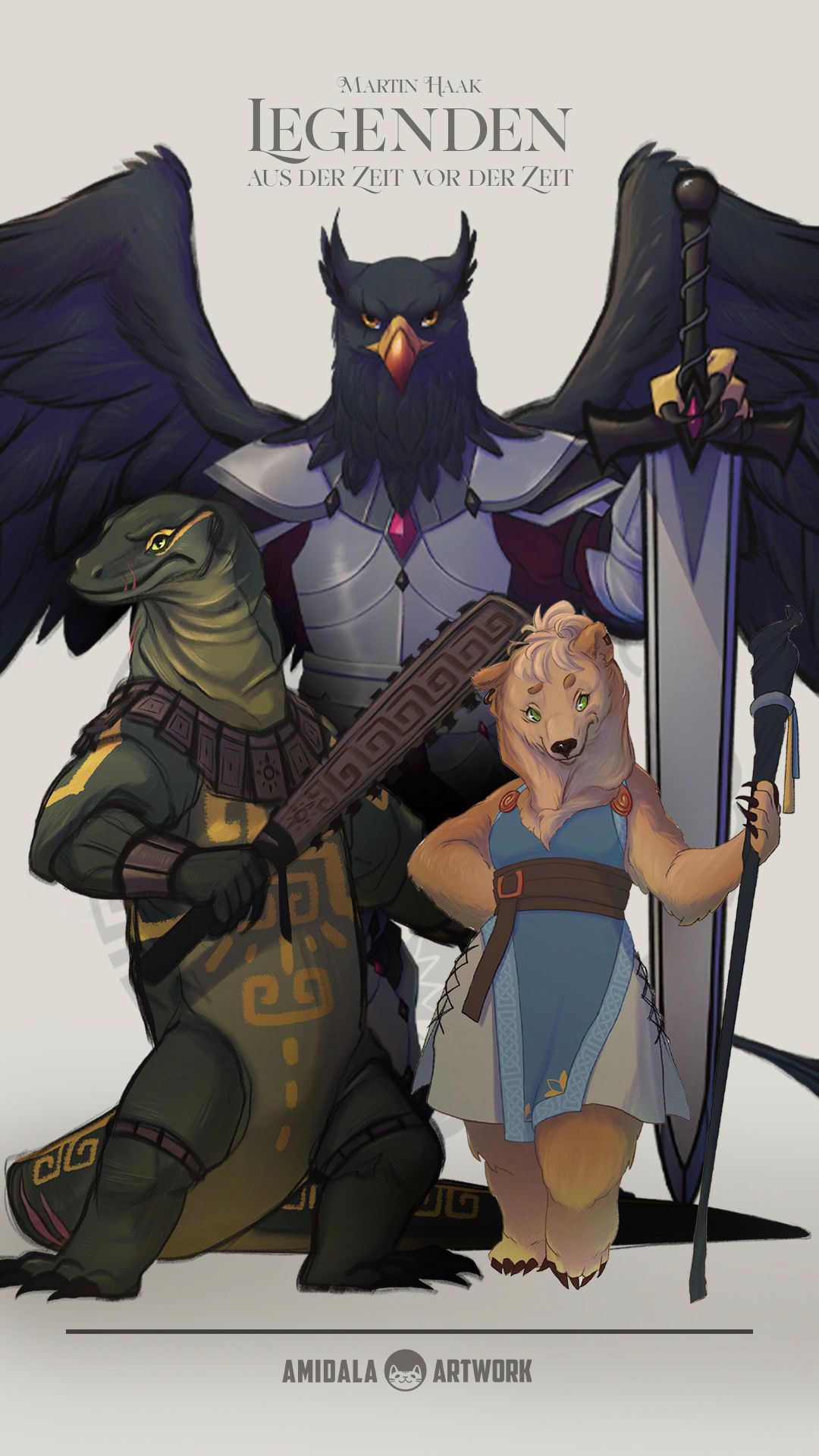
Only animals. Bears from the northern lands, griffins ruling a kingdom, reptiles inhabiting the ruins of a fallen empire. The world is populated entirely by them – with their own cultures, religions, conflicts and legends.
Honeymaw, a young she-bear of the forest tribes, stands at the beginning of a story that proves epic fantasy can work without the familiar races. The series combines the atmospheric depth of Watership Down with the political and cultural scope of great high-fantasy sagas – while remaining wholly focused on animals.
That is the essence of this form of animal fantasy: not “animals that are like humans”, but a world in which animals write the story.